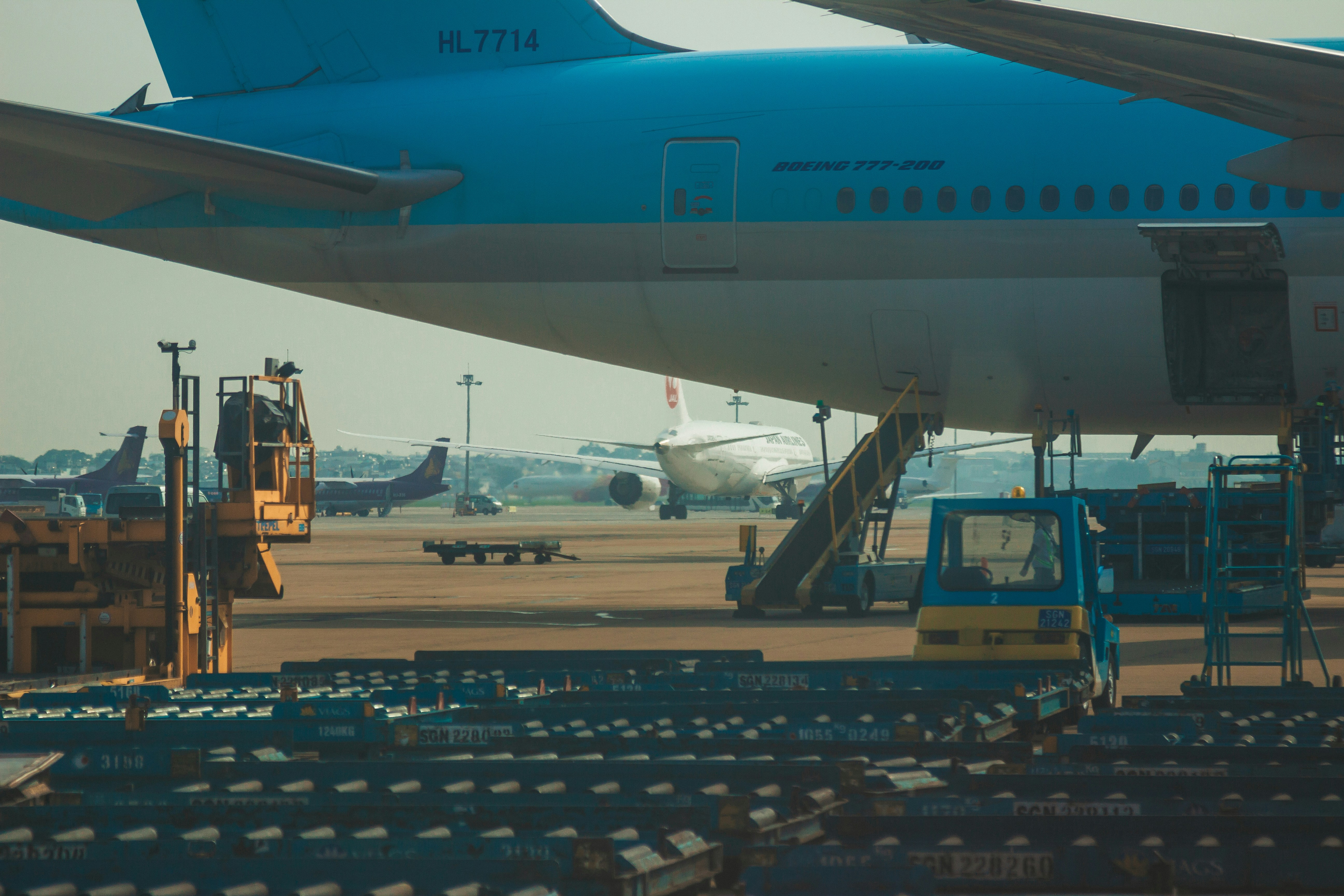
Tokyo International Airport, widely known as Haneda Airport and designated by the code HND, is located in Ōta, in southern Tokyo. Its position near the capital’s central districts has made it a practical point of arrival for residents, business travelers, and visitors heading to the wider metropolitan area. For many journeys to Japan, Haneda is not simply an airport but a key link between Tokyo and the country’s regions.
Haneda has a central place in Japan’s aviation network, particularly because of its extensive domestic connections. Flights link the capital with cities and regional destinations across the archipelago, supporting business, tourism, and travel between communities. The airport also serves international routes, connecting Tokyo with destinations abroad. This combination of domestic reach and global access has helped establish HND as one of the country’s major aviation hubs, alongside its role as a gateway to Japan’s political, commercial, and cultural center.
Its present importance reflects decades of development, changing travel patterns, and investment in airport capacity and services. A historical account of Haneda therefore involves more than a timeline of construction or expansion: it also considers how the airport’s function has shifted as domestic demand, international access, and the needs of travelers have evolved. Passenger totals, route networks, and airport rankings offer useful measures of that change, but each figure must be read in relation to its reporting period. Annual totals may reflect different operating conditions, while route availability and comparative rankings can change from year to year. This overview traces Haneda’s growth and milestones while using statistics to place its development in context. The aim is to show how the airport became a major gateway to Tokyo and an influential part of Japan’s air transport system, without treating figures from different periods as directly interchangeable.
Haneda’s history began before the airport became a major gateway for Tokyo. On August 25, 1931, Tokyo Airport opened on the city’s waterfront as Japan’s first purpose-built public airport. Its initial facilities were modest by modern standards: a small passenger terminal, hangars, and a runway roughly 300 metres long. The new airfield offered a more organised base for scheduled flights than the temporary grounds and limited aviation facilities previously used around the capital. This opening marked the start of public airport operations at Haneda, not the completion of the large, continuously expanding complex known today as hnd airport.
During the 1930s, the airfield supported the gradual growth of commercial aviation in Japan. Domestic routes connected Tokyo with other cities, while services also linked the capital to destinations elsewhere in East Asia. As aircraft and passenger demand increased, operators needed more space and improved facilities, prompting successive extensions to the runway and airport grounds. These early changes reflected a broader shift: air travel was moving from a specialised activity toward a developing transport service, although schedules and capacity remained limited compared with later decades. Haneda’s location near central Tokyo helped establish it as the principal airport serving the capital.
The airport’s role changed sharply during the Second World War, when military authorities took control and civilian services were curtailed. After Japan’s surrender, US forces occupied the site and operated it as Haneda Army Air Base, further separating this period from its original public-airport opening. The facility returned to Japanese control in 1952 and was renamed Tokyo International Airport. That transition enabled commercial aviation to resume and provided a platform for postwar expansion, including the growth of domestic services and the return of international flying. The airport’s early story therefore spans distinct phases: its 1931 establishment as a public airfield, wartime and occupation use, and its later development into Tokyo’s primary passenger hub.
After Japan’s surrender in 1945, Allied forces took control of Haneda and renamed it Haneda Army Airfield. The site served military purposes and remained under occupation administration, limiting Japan’s authority over its principal gateway near Tokyo. Its runway and facilities nevertheless retained strategic value, and the airfield continued to operate in a period when civilian aviation was constrained by postwar conditions. This phase marked a sharp break from Haneda’s prewar role and placed its future development within the broader process of rebuilding Japan’s transport infrastructure.
Japanese administration resumed in 1952, as the occupation ended and control of the airport returned to Japan. The transfer coincided with economic recovery and renewed demand for domestic travel. As businesses, tourism, and personal mobility expanded, more passengers relied on air services to connect Tokyo with regional cities. Japanese airlines increased their operations, and international carriers also began serving the capital, adding pressure to facilities that had been designed for a more limited level of activity. Improving runways, terminals, and passenger services became increasingly important to meet the needs of a growing aviation market.
Haneda’s postwar transformation therefore involved more than restoring an airfield to civilian use. It developed into a central commercial airport, supporting the expansion of scheduled routes and helping connect Japan’s recovering economy. The increase in passengers and airline activity encouraged successive improvements in capacity and operations, laying foundations for later growth. For the hnd airport, the shift from Allied-controlled military facility to a busy, Japanese-administered transport hub was a defining milestone. It established Haneda as an essential part of the country’s domestic aviation network and strengthened its role as a gateway to Tokyo, even as the scale of demand would eventually require further expansion and new airport infrastructure.
Narita International Airport opened in 1978 after years of planning and construction intended to address the limits of Tokyo’s existing airport infrastructure. At the time, Haneda was close to the city and increasingly constrained by rising traffic, limited room for expansion, and the operational demands of a major international gateway. Narita, located farther from central Tokyo in Chiba Prefecture, was developed to accommodate larger volumes of international traffic and provide space for future growth. Its opening marked a significant change in the roles assigned to the Tokyo-area airports, but it did not create a permanent or complete separation of services.
In the years that followed, Narita became the principal gateway for many long-haul international flights, while Haneda concentrated largely on domestic routes connecting Tokyo with cities across Japan. This division reflected government policy, airport capacity, airline planning, and the practical need to allocate traffic between two facilities. It was not absolute: some international operations continued at Haneda, and arrangements evolved as demand, infrastructure, and aviation rules changed. The hnd airport therefore remained an important part of international aviation even during a period when Narita handled the greater share of overseas services.
The two-airport system shaped airline networks and passenger choices. Airlines often organized domestic connections through Haneda and international departures through Narita, requiring some travelers to transfer between airports when their journeys combined both types of service. The distance between the facilities added time and complexity, influencing schedules, connecting itineraries, and perceptions of convenience. For many passengers, Haneda became associated with frequent domestic travel and proximity to central Tokyo, while Narita represented Japan’s main international gateway. These perceptions reflected the service pattern of the period rather than fixed identities. As policy and capacity changed, the balance shifted, and Haneda gradually regained a broader international role. Narita’s opening thus reshaped the mission of the hnd airport without ending its evolution or reducing its importance to Tokyo’s aviation network.
Haneda’s growth depended on reshaping its physical footprint as well as improving airport operations. Because the original site had limited room for expansion, major projects extended the airport onto reclaimed land in Tokyo Bay. These offshore additions created space for new runways, taxiways, aprons, and passenger facilities, allowing the airport to accommodate more aircraft without relying solely on redevelopment of its earliest areas.
Runway construction proceeded in stages. The A, B, and C runways supported rising domestic traffic, while later reclamation made it possible to add a fourth runway farther offshore. Opened in October 2010, the 2,500-meter D runway marked a major turning point for HND airport. Its addition increased the airport’s capacity for takeoffs and landings and enabled more flexible scheduling, including additional international services. The runway and its connecting infrastructure were designed as part of the expanded island layout, rather than as an isolated upgrade.
Passenger terminals also changed to match demand. Terminal 1 opened in 1993, replacing older facilities and providing a more modern base for domestic airlines. Subsequent improvements and expansions increased its usable space and passenger-processing capacity. Terminal 2, which opened in 2004, added a separate facility for domestic operations and helped distribute travelers across the airport. Later development expanded its role and facilities as traffic patterns changed.
The international terminal opened in 2010 alongside the fourth runway, providing dedicated space for a substantial increase in international services. It was renamed Terminal 3 in 2020, when Terminal 2 also began handling some international flights. Together, the projects addressed different constraints: reclamation supplied land, new runways raised aircraft movement capacity, and terminal development improved check-in, security, boarding, and passenger circulation. Their coordinated delivery transformed Haneda from a primarily domestic airport into a larger international gateway while preserving room for continued growth.
For much of the postwar era, Haneda’s scheduled international services were limited, while Narita handled most of Tokyo’s long-haul traffic. That arrangement began to change as demand grew and airport capacity was expanded. A new runway and international passenger terminal opened at Haneda in 2010, enabling a substantial increase in scheduled international flights. The development marked a turning point for hnd airport, reconnecting it with major overseas destinations and giving travelers another gateway to the Japanese capital.
Further increases in international flight slots followed, including a major expansion in 2014. Airlines added routes to cities across Asia and resumed or launched longer-distance services to destinations in Europe and North America. Haneda’s location is a central part of its appeal: it is considerably closer to central Tokyo than Narita, often making transfers faster and more convenient for business travelers and visitors staying in the city. For airlines, however, adding services has depended on the availability of slots and the airport’s ability to accommodate more movements. Runway capacity, air-traffic management, and operating-hour restrictions all limit how quickly schedules can grow.
In March 2020, the airport renamed its international passenger terminal Terminal 3, aligning the terminal’s name with the numbering used for Haneda’s other passenger facilities. The change came as international travel was being sharply curtailed by the COVID-19 pandemic. Border controls, suspended routes, and reduced passenger demand disrupted both the timing and scale of the international expansion that had been underway. Although services later returned and route networks began rebuilding, recovery was gradual and varied by destination and airline. The long-term role of hnd airport as a major international gateway therefore reflects both its strategic proximity to Tokyo and the practical limits of airport capacity, as well as the substantial interruption caused by the pandemic.
Haneda Airport statistics describe different kinds of activity, and the measures should not be treated as interchangeable. Annual passenger movements count passenger journeys handled by the airport, usually recording an arrival or a departure as one movement. A traveler flying from Haneda to another city and later returning therefore contributes at least two movements. The total is not a count of unique people, and comparisons should use the same reporting period and the same definition, such as calendar year or Japanese fiscal year.
Passenger totals can be divided into domestic and international traffic, revealing how the balance of Haneda’s network changes over time. Aircraft movements, by contrast, count aircraft takeoffs and landings; they do not count passengers or flights’ available seats. Cargo statistics generally report freight handled by weight, often in tonnes, and may distinguish international from domestic cargo. Route counts also require context: published figures may count destinations, city pairs, or services, and a route can be served by multiple airlines. Passenger capacity refers to seats offered, not seats filled, so it differs from both passenger movements and aircraft movements.
For reliable comparisons, consult official Japanese transport ministry airport statistics and Haneda’s own annual reports, checking the stated period, units, and coverage before quoting a figure. Route schedules and seat capacity can vary by season, while cargo and passenger totals may use separate accounting conventions. COVID-19 produced a sharp fall in air travel as restrictions reduced demand and services; subsequent increases represent recovery from that unusually low baseline. Figures from pre-pandemic, pandemic, and recovery years should therefore be presented as dated observations, not as directly comparable evidence of ordinary year-to-year growth. A useful account identifies the reporting year, separates domestic and international passengers where available, and labels each measure clearly. This makes the airport’s scale and changing traffic mix easier to understand without implying that more passengers necessarily mean more aircraft movements or more seats.
Haneda Airport is an important gateway for Tokyo and the wider Japanese economy. Its domestic connections support business travel between the capital and cities across the country, helping companies maintain face-to-face relationships and enabling workers to travel efficiently. International services also bring visitors closer to central Tokyo, supporting tourism, hospitality, retail, and cultural activities. The movement of passengers and goods sustains employment not only at the airport but also in airlines, ground handling, transport, food services, shops, and other airport-related businesses. In these ways, hnd airport contributes to economic activity well beyond its terminals.
Access is a central part of Haneda’s role. Travelers can reach the airport by rail, including railway services and the Tokyo Monorail, as well as by airport buses, taxis, and road connections for private vehicles. These options serve different needs: rail provides scheduled links, buses connect with a range of destinations, and taxis or cars offer direct journeys. The ability to choose among several modes can make airport access more convenient for residents, visitors, and business travelers. Proximity to Tokyo’s urban area, combined with these transport links, is often cited as a competitive advantage, although journey times vary with destination, service schedules, and traffic.
The passenger experience is shaped by terminal services, transport connections, and the layout of airport operations. Haneda’s domestic and international operations are handled in separate terminals, helping travelers identify the facilities relevant to their journey while requiring attention to terminal information when transferring. Shops, dining, information services, and passenger assistance support different stages of a trip. Accessibility improvements, such as step-free routes and facilities intended to assist passengers with reduced mobility, are also important to making journeys more manageable; travelers should check current arrangements for specific needs. Together, these features influence how easily people can move through the airport, connect with onward transport, and use Haneda as a practical gateway to Tokyo and Japan.
Today, Haneda is one of the world’s busiest airports and a central hub in Japan’s aviation system. Its location close to central Tokyo supports domestic connections, international travel, and links between the capital and regional communities. In 2024, the airport handled approximately 85.9 million passengers, ranking fourth worldwide by passenger traffic, according to Airports Council International’s preliminary figures. This scale reflects decades of expansion and the continuing importance of the hnd airport to Japan’s transport network.
Meeting future demand will require careful choices. Passenger numbers and airline activity may continue to grow, yet the airport operates within a densely developed urban area where additional land is difficult to secure. Capacity improvements must therefore make effective use of existing terminals, runways, and airspace while limiting disruption to surrounding communities. Noise remains a significant concern, particularly for residents affected by flight paths, and aviation’s environmental impacts—including carbon emissions—will require sustained attention.
Resilience is equally important. Haneda must prepare for earthquakes and other emergencies, as well as severe weather that can interrupt flights and affect infrastructure. Maintaining safe, efficient operations depends on robust facilities, clear emergency procedures, coordination among airport agencies and airlines, and the ability to restore services quickly. As traffic grows, technology and operational planning can help manage aircraft movements and passenger flows, but reliability and safety must remain fundamental priorities.
These pressures are not entirely new. Throughout its history, Haneda has adapted to changing needs: it began as an airfield, developed into a major domestic gateway, and later expanded its role as an international hub. Its next phase will depend on balancing connectivity and capacity with environmental responsibility, community needs, and preparedness for disruption. The airport’s record of transformation offers a useful foundation, but past expansion does not determine the right course ahead. Decisions about infrastructure, operations, and sustainability will shape how Haneda serves Tokyo and Japan in the years to come.
